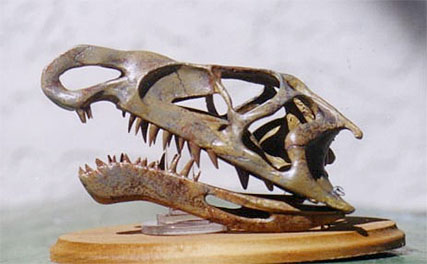
Riojasuchus tenuiceps skull
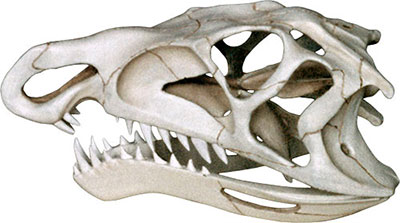
Finished model by Steve Harvey
All Wiccart models are rare and this one is especially so. The kit is dated 6 Jan 1991, making it one of the Wiccart's earliest models. For unknown reasons, the original Wiccart website did not list this model (likley sold out). Early Wiccart models were roughly cast in an odd translucent amber-colored resin and this is a good example (see Parts photos below). The subject is unusual and the only Riojasuchus skull reconstruction I know of. Because of this it is often used to illustrate the species.
I was fortunate to finally obtain an original example of this model from a Singapore collector known as SiaoMouse. Prior to obtaining the kit from him, SiaoMouse sent me some wonderful photos of this and other Wiccart models in his collection. Even better, he had not built the Riojasuchus skull model despite having had it for over a decade, so the original was preserved in pristine condition and and could be properly documented here.
I won't build this model but instead recast the original parts and work on a copy; my modus operandi now is to preserve original unbuilt models wherever possible. Kits like this are extremely rare (at most only 25 of each Wiccart model were made) and to have a mint and unbuilt example means it is very likley the only one to survive. Finding rare and unusual material like this is great but the importance lies in documenting and preserving it.
Kit
Comprises:
- 9 separate cast parts (5 are gangs of multiple teeth)
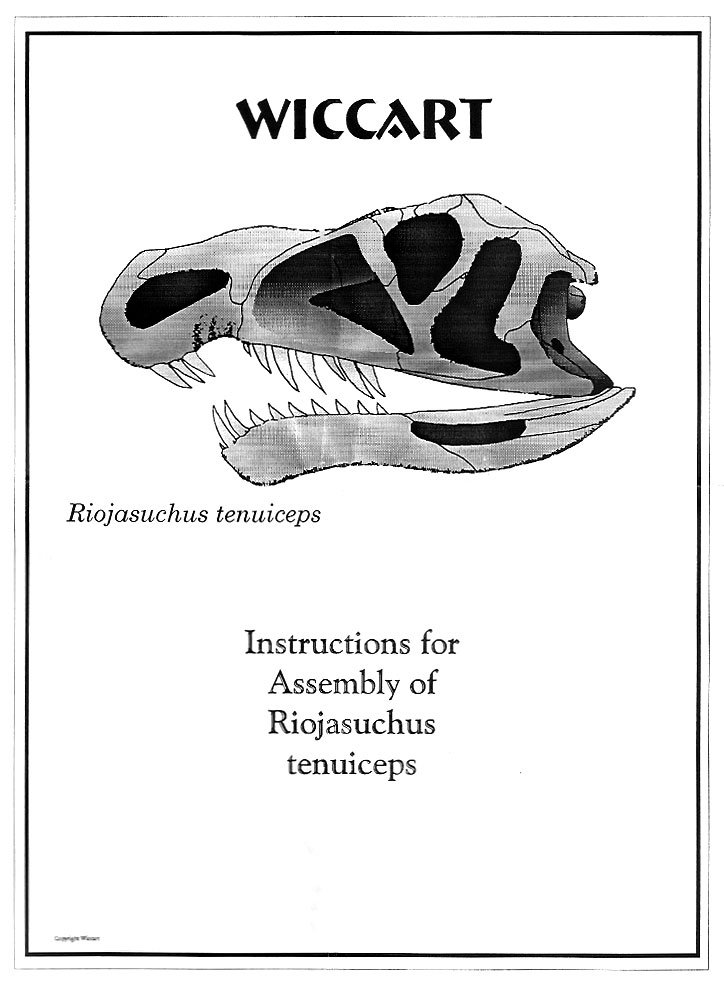
- 4 pages of instructions
- Color photo of finished model
- Water slide decal
- No box or custom packaging
- No mounting hardware (wood base available by request)
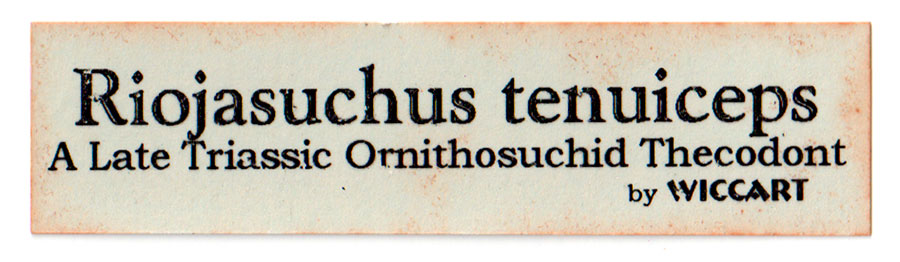
Water-slide decal (~20 mm H, ~75 mm L)
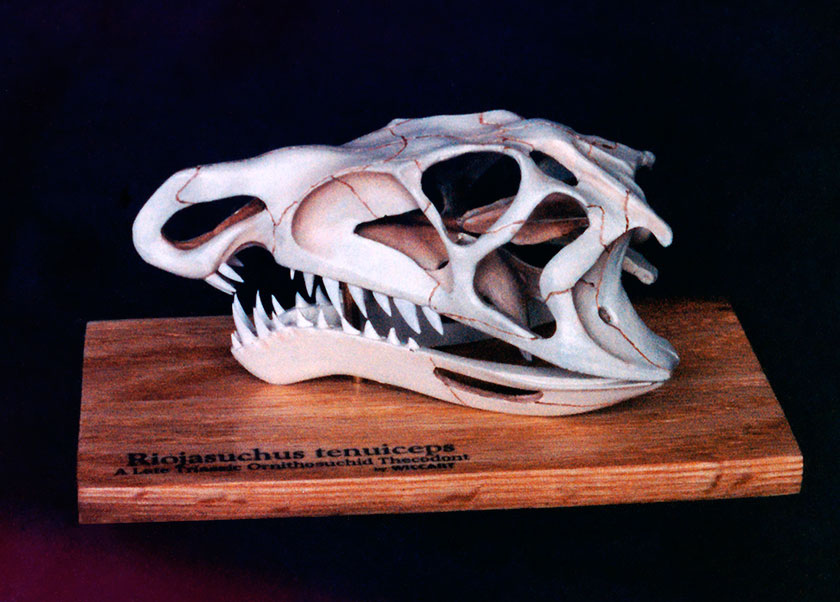
Original Wiccart photo print included in kit
Parts
Parts images kindly provided by SiaoMouse (Singapore)
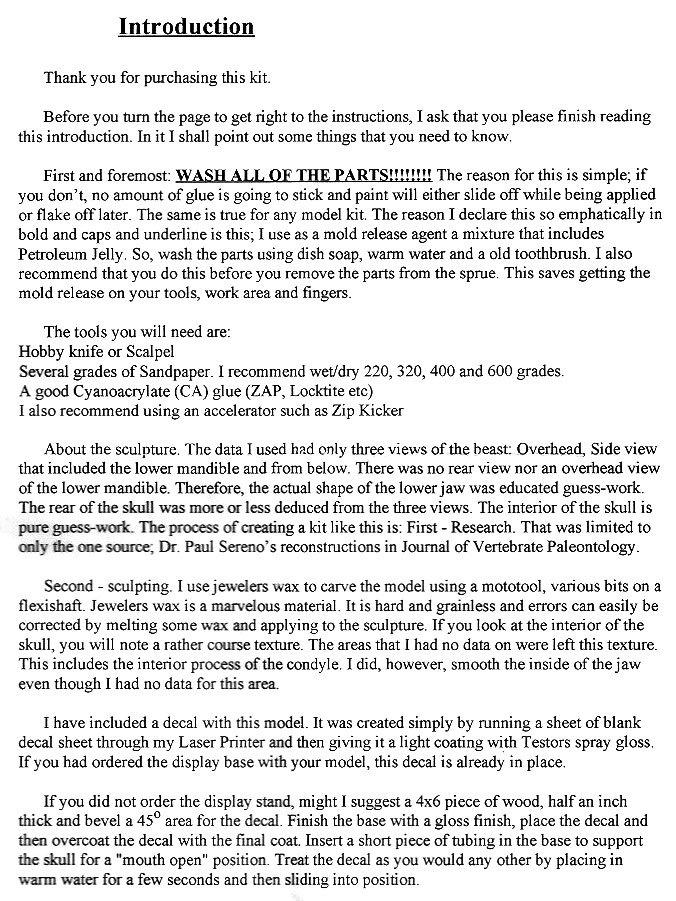
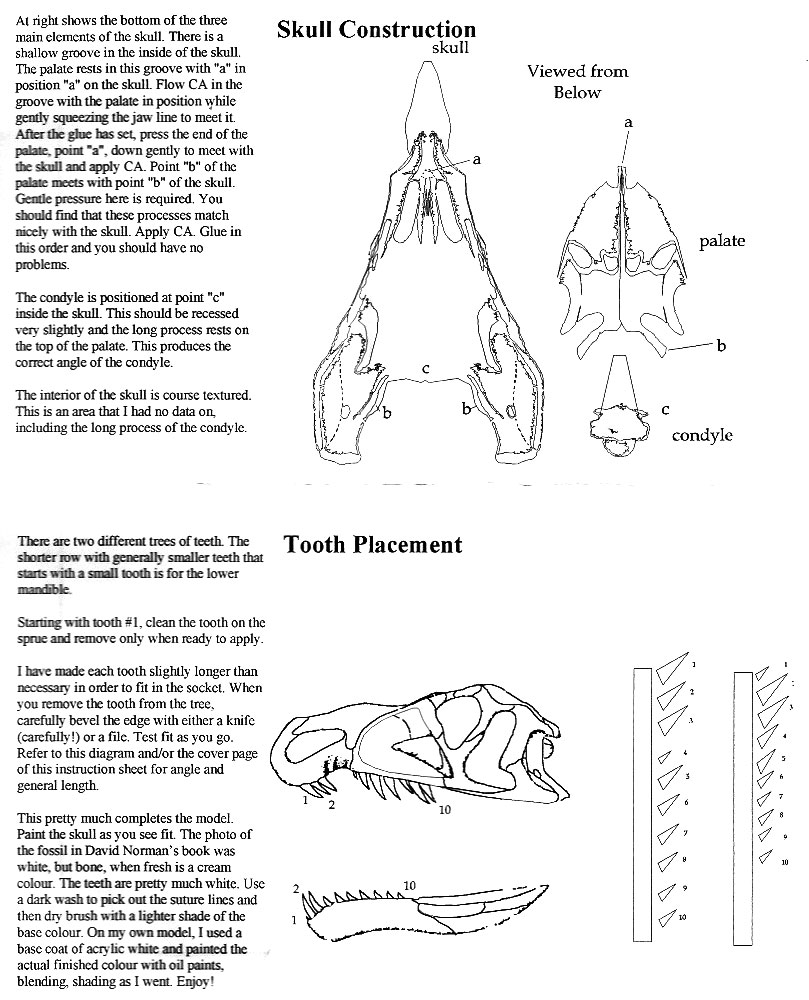
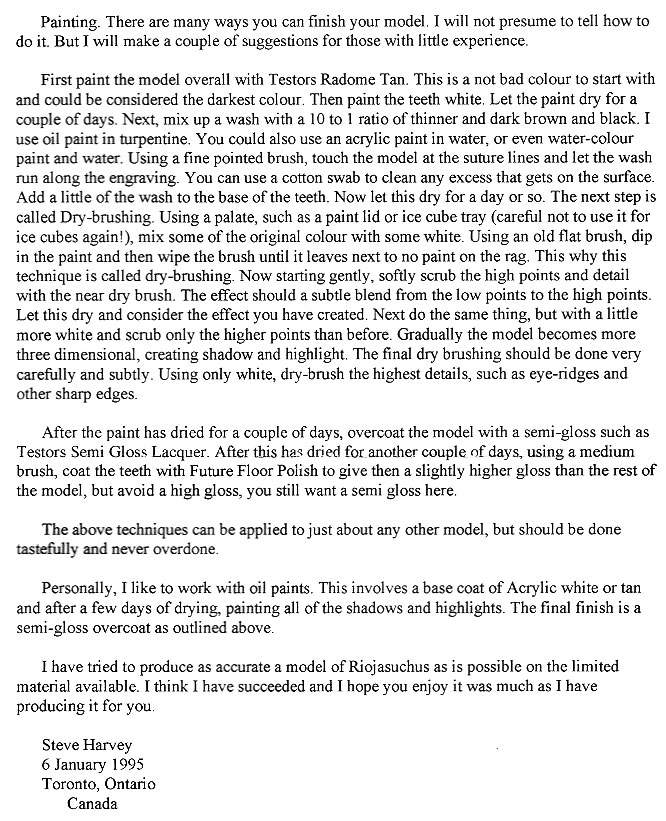
Instructions
Sightings
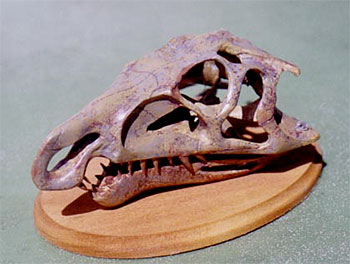
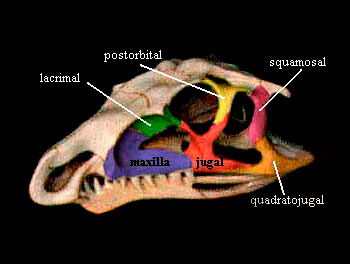
Overpainted image of the Wiccart model used to help describe skull bones at palaeos.com
Press
Prehistoric Times
In the Triassic jungles of what is today Scotland, a 13 foot long, four legged carnivore called Ornithosuchus terrorized the fauna. With characteristics of both the birds and crocodiles that would later evolve, the ornithosuchians were border-line dinosaurs that were pushed out of existance by bi-pedal dinosaurs at the end of the Triassic era. In what is now South America, an ornithosuchian about half the size of Ornithosuchus also reigned. Scientists have named this animal Riojasuchus tenuiceps after the area in which it's fossilized remains were discovered. This ancient animal is the subject of sculptor Steve Harvey's follow-up model kit to his life-size Rhamphorhynchus skeleton kit previously reviewed in PT. Steve's company, Wiccart offers a new resin model kit in four parts plus 40 individual teeth of Riojasuchus' skull (about half size at five inches long). Steve was kind enough to send a copy of this new kit to us at PT for reviewing purposes. The well crafted and expertly molded model appears to faithfully capture the look of this interesting animal based on limited drawings and information that we at PT could find. For a truly unusual and original model representation, add this Thecodont skull to your collection.
— Issue #11, March–April 1995.
Reference
Riojasuchus is an ornithosuchid, not a dinosaur. Ornithosuchia were medium-to-large (up to 3.3m long) quadrupeds whose teeth clearly identify them as active carnivores. The teeth recurve to face backwards, perhaps to prevent struggling prey getting free.
Because the hindlimbs were larger than the forelimbs it was thought they were bipedal, but they were more probably only faculative bipeds (they could run on just the back legs but stayed mostly on all fours). The skull is short with eye orbits laterally directed (so they did not have forward-facing vision like theropods). The the upper jaw is clearly longer than the lower jaw, with a conspicuous constriction in the premaxilla (frontmost part) creating a gap for lower teeth to fit into in a locking bite.
The Ornithosuchids were one of several of groups of archosaurs that evolved a fully-erect (bird- and mammal-like) limb posture rather than remain with the crawling and semi-erect postures of more primitive thecodonts and the semi-erect posture of modern crocodiles. Ornithosuchus was first classified as a psuedosuchian thecodont, then later as an early theropod dinosaur, then as a dinosaur-uncle, and now as a side-branch on the line to Crocodiles!
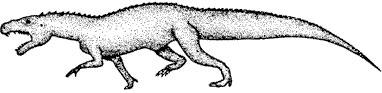
Life reconstruction of Riojasuchus
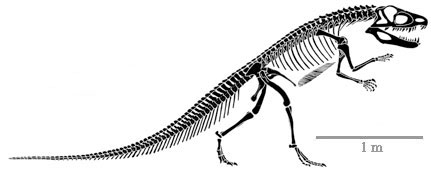
Skeleton reconstruction of Ornithosuchus in a bipedal running posture
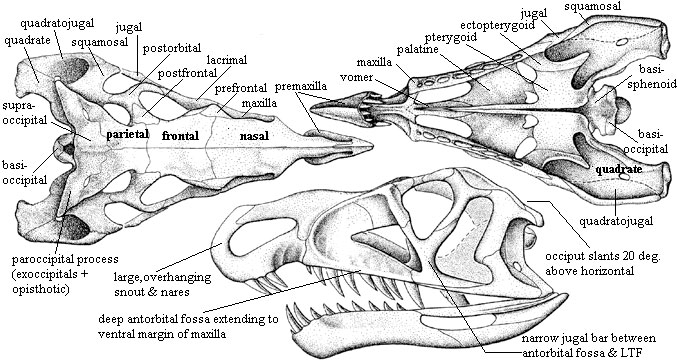
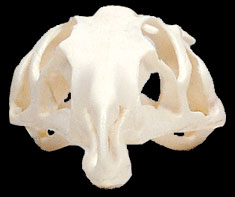
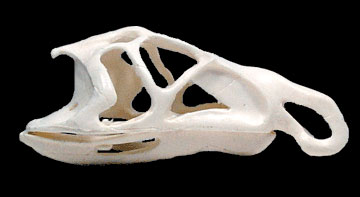
Fossil material found here while websurfing; the only description being "cast of skull and jaw found in Argentina, South America 10.5 cm"
Request
If you have additional information, resources or images
I am very keen to hear from you. Please contact me.