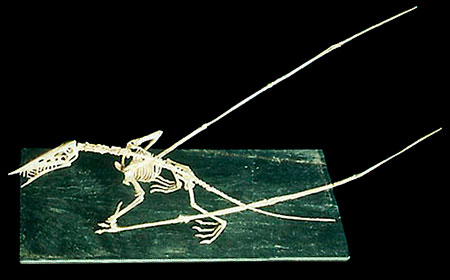
1:1 Rhamphorhynchus muensteri
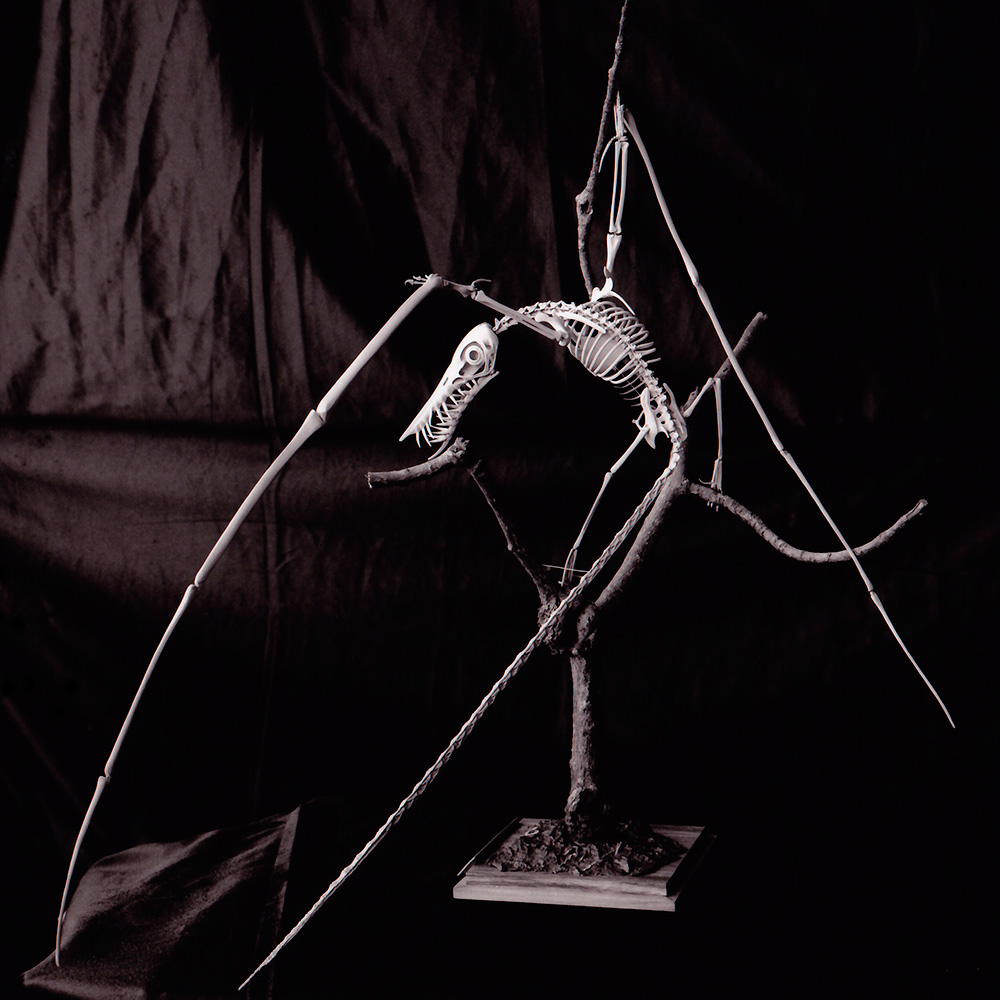
Image scanned from the original Wiccart glossy kit photo supplied to Horst Bruckmann.
The first (and the only full skeleton) model kit made by Steve Harvey, the man behind Wiccart Paleosculpture. Wiccart offered a range of hand-cast resin models from an online shop. (View archived links to the original Wiccart site from between between 1999 and 2000).
I first heard about this model some years ago but only after it was long out of production. I wondered if I'd ever see one as there were no photos or details to be found anywhere on the web. Happily, Horst Bruckmann came to the rescue as he owns a copy of an original full skeleton model which he purchased fully assembled from Wiccart (see below). To help me document the model Horst sent me all his resources, including original correspondence with Steve, the kit instruction manual and even glossy photo prints of various other Wiccart kits.
There were two versions of the kit, as explained by Steve:
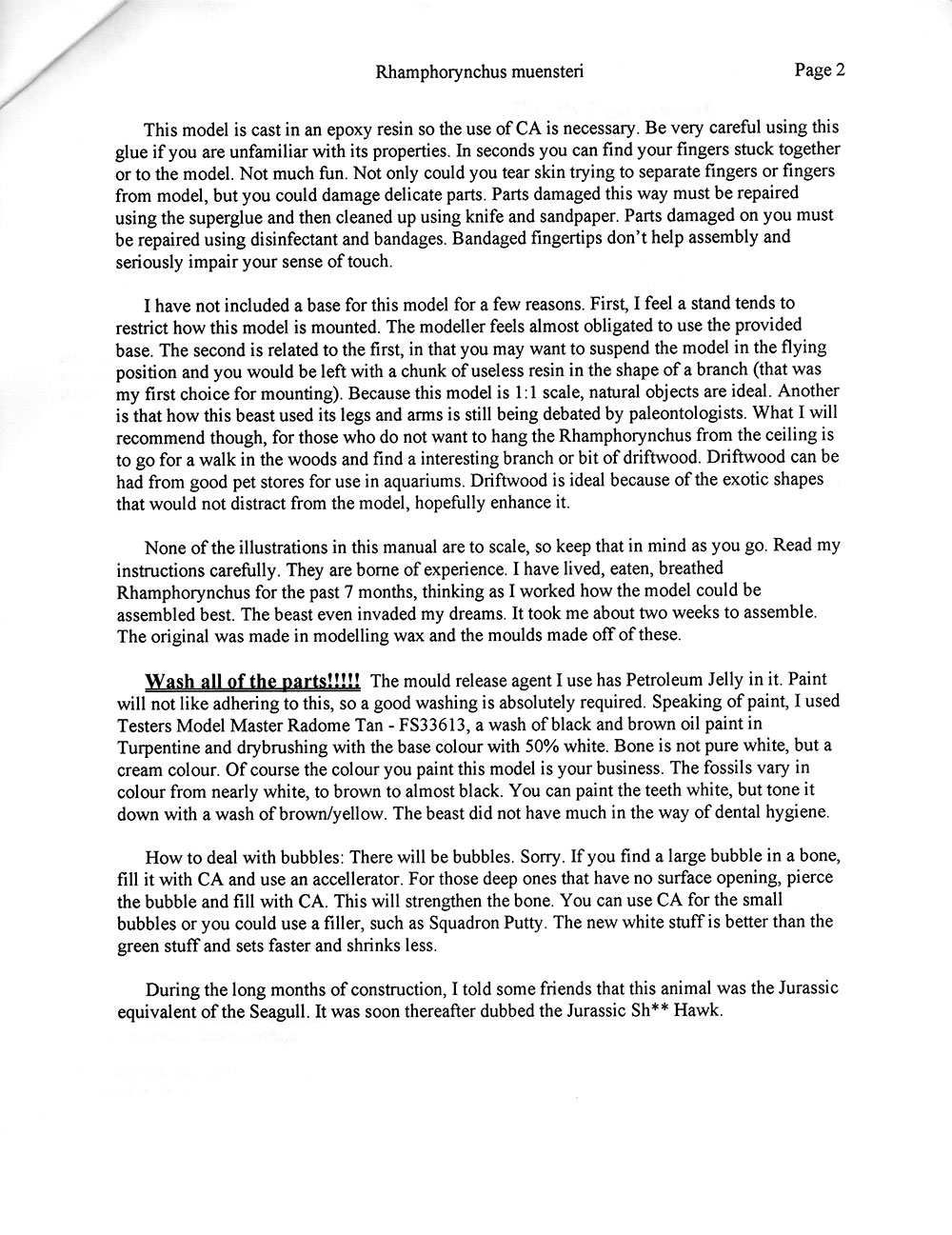
"The original kit was very complicated to build and required very advanced modeling skills. In fact, it took me an average of 40 hours to build... And I designed it! I improved the kit by hollowing out the skull to make it much more delicate (see the new skull here). The new kit is very much easier to build, but still requires some advanced skills as most parts are held together with wire."
The
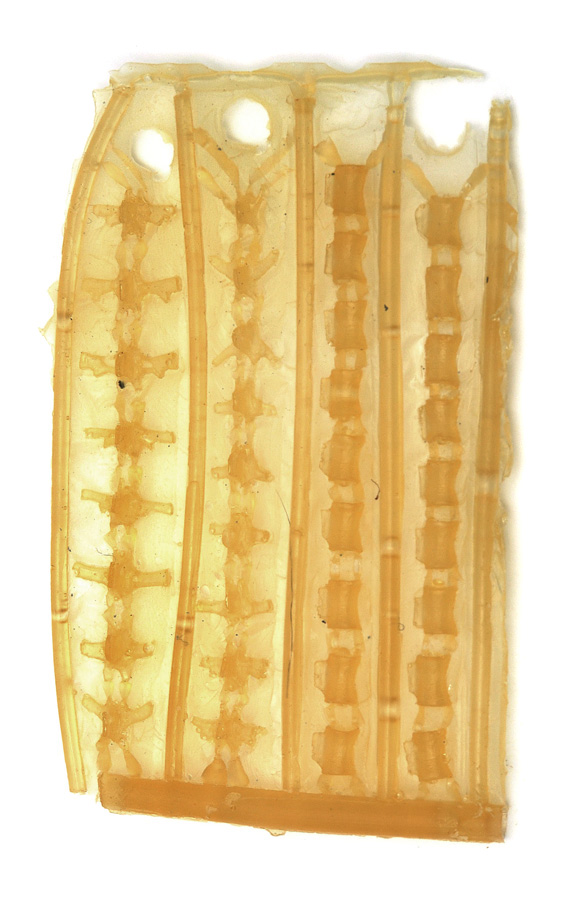
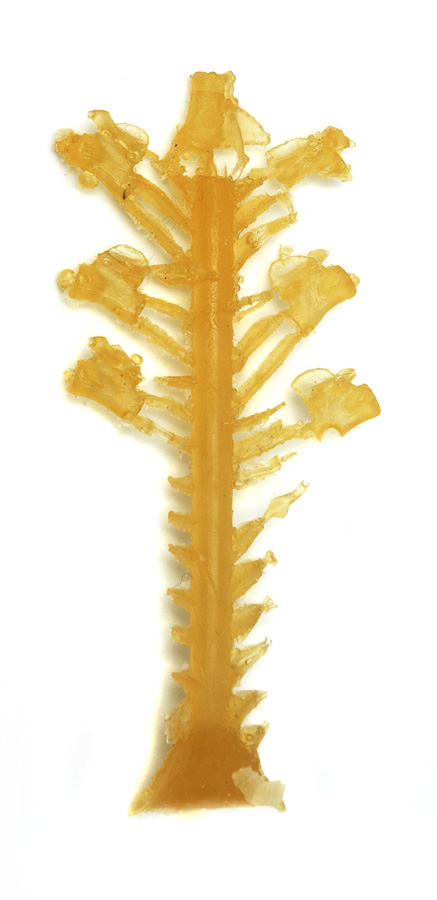
new simplified skeleton kit had fewer parts (87, down from 171)
although the skull part count increased by 1 to 43 (skull, palate, jaw
and 40 teeth). The spine decreased from 52 to 5, the neck from 19 to
13 and the hands and feet from 5 each to 1. In the original kit each
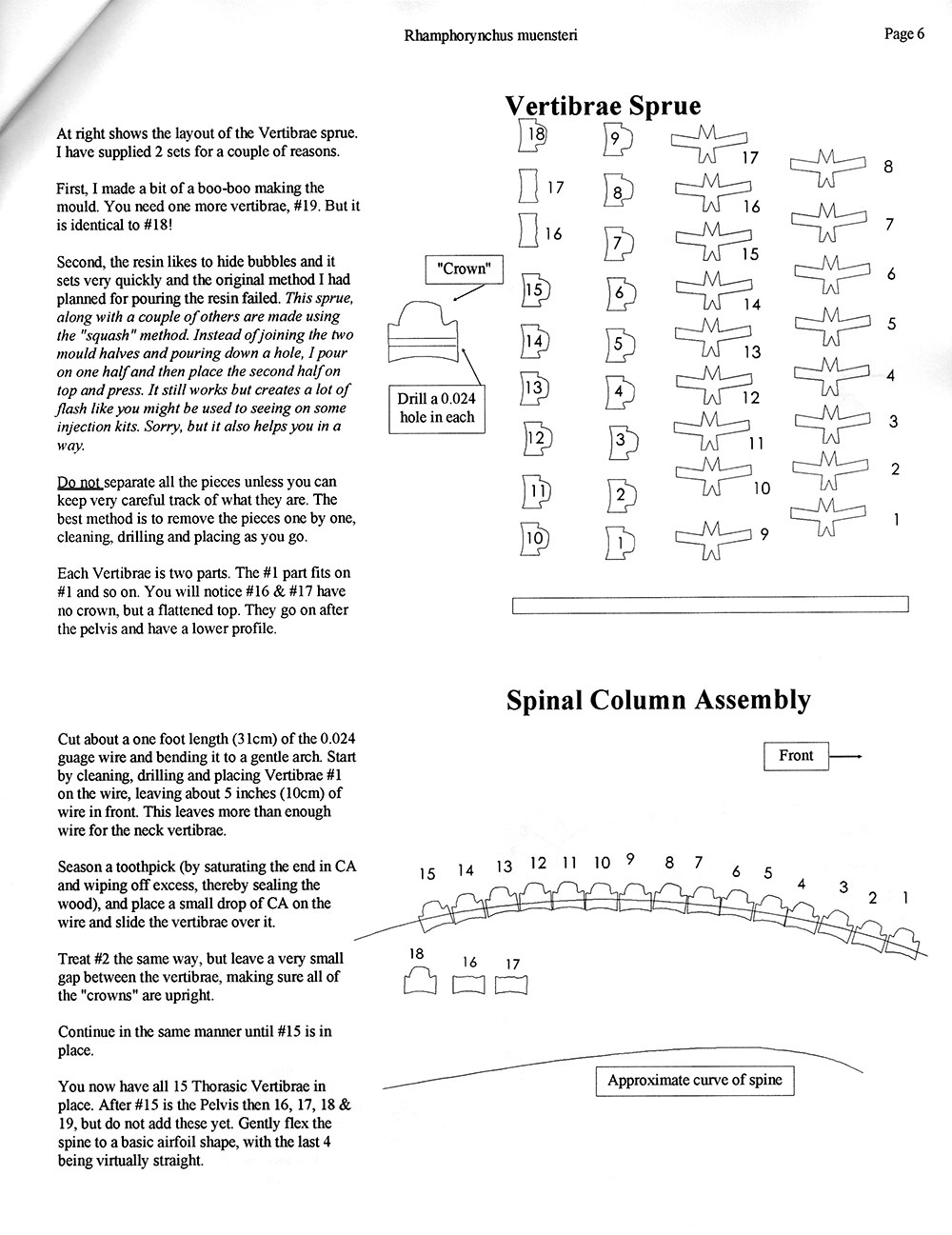
vertebrae consisted of two parts plus separate ribs where in the new
version vertebrae are molded together in pairs with ribs attached.
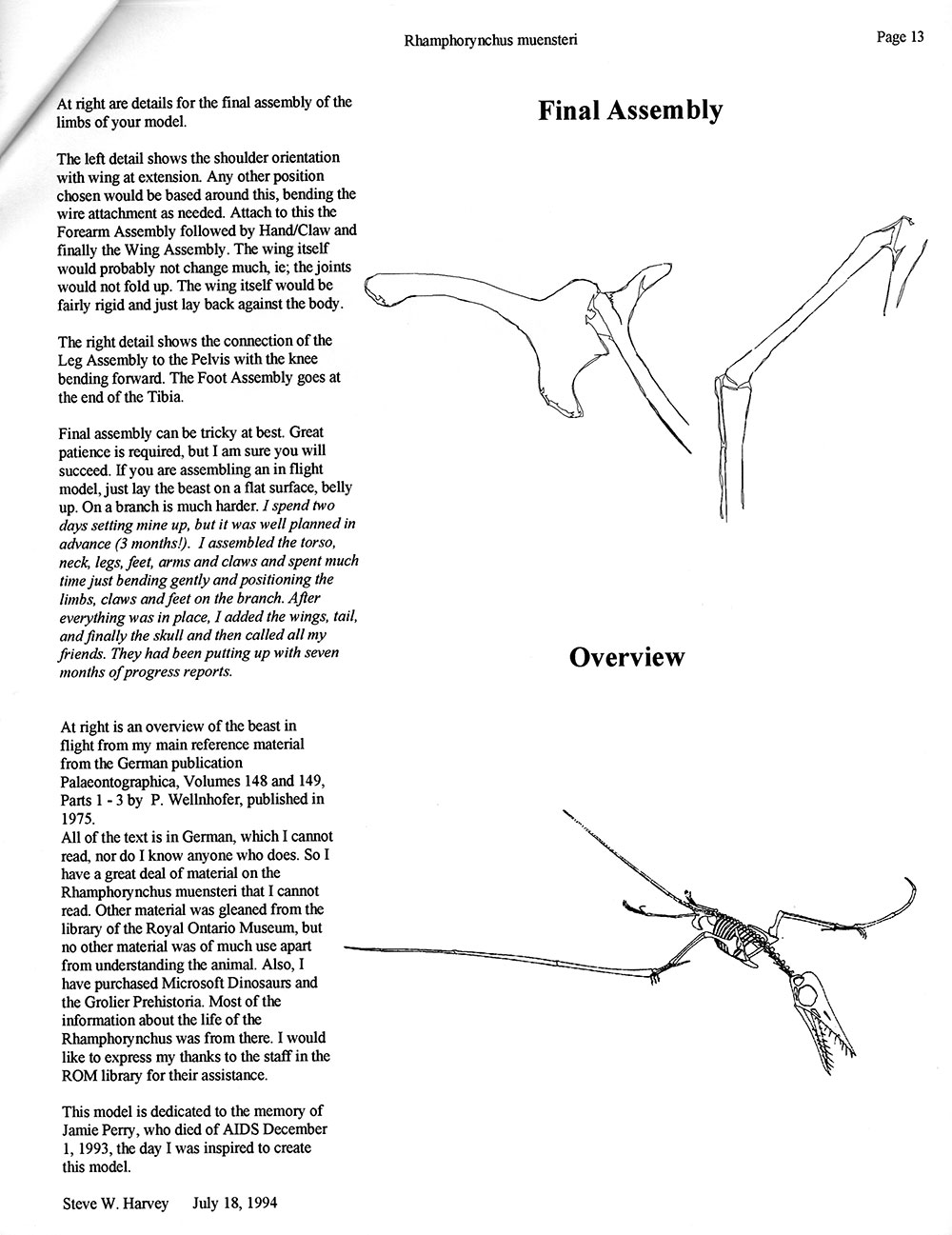
The model was sculpted largely by referencing Wellnhofer, 1975; Palaeontographica, abt A., Volume 148-149, Parts 1-6, 1-3: Die Rhamphorhynchoidea (Pterosauria) der Oberjura-Plattenkalke Sueddeutschlands. (trans: The Rhamphorhynchoidia (Pterosauria) from the Upper Jurassic Lithographic Limestones of Southern Germany ). The article includes reconstruction drawings of almost every bone.
This
kit, like most others documented here on my website, is another example
of a great model owing its inspiration and existence to the publication
of a good publicly accessible set of skeletal diagrams.
Steve dedicated the model to the memory of Jamie Perry, who died of AIDS Dec 1, 1993, the day he was inspired to create the model.
UPDATE
I finally obtained a copy of this kit (two in fact!) in Dec 2010 from Bill Vinikour (USA). Bill saw mention of Brantworks.com in Prehistoric Times (love that mag!). He ran a store/mail order business in the late 1990's called Primeval Creations. Bill never built or sold his Rhamphorhynchus kits and very generously offered them to me.
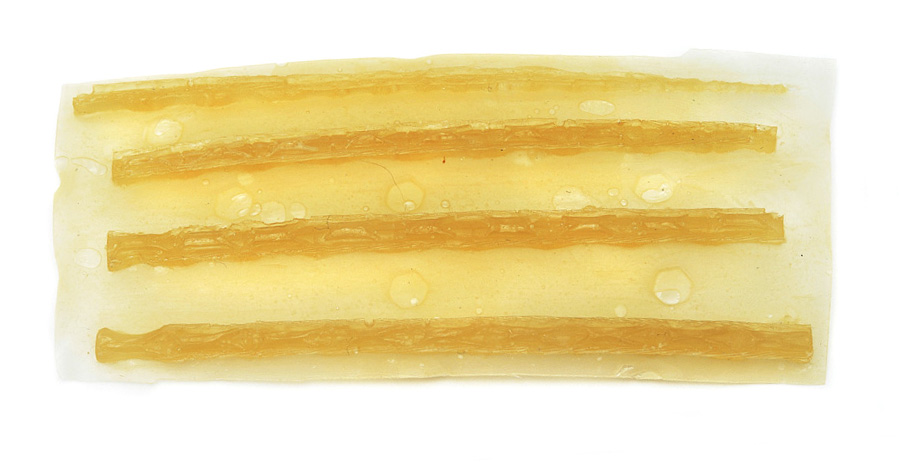
I now have them and they are very early (dated July 18, 1994) and roughly cast in the original Wiccart translucent amber-colored resin. They didn't include the standard Wiccart water-slide decals. It would be challenging to build two skeletons from the parts as they were all mixed together with some parts cast 3 or 4 times; I guess the idea was to try and salvage a set of useable parts out of extra casts. I'll preserve one master kit and reconstruct and recast the remainder to rebuild a model in my preferred white resin. I'll also affix my recast of the newer version of the skull (the original skulls are rough and very heavy (they weren't hollow).
The other thing that struck me was how small the skeleton model is; it's tiny! I hadn't realized just how much. The individual vertebrae and other parts are vanishingly small and it will be challenging to build.
More Kit Photos
Each kit included a glossy monochrome photo of the master model. Steve describes the mount in his kit instructions: "it
was well planned in advance (3 months!). I assembled the torso, neck,
legs, feet, arms and claws and spent much time just bending gently and
positioning the limbs, claws and feet on the branch. After everything
was in place, I added the wings, tail, and finally the skull and then
called all my friends. They had been putting up with seven months of
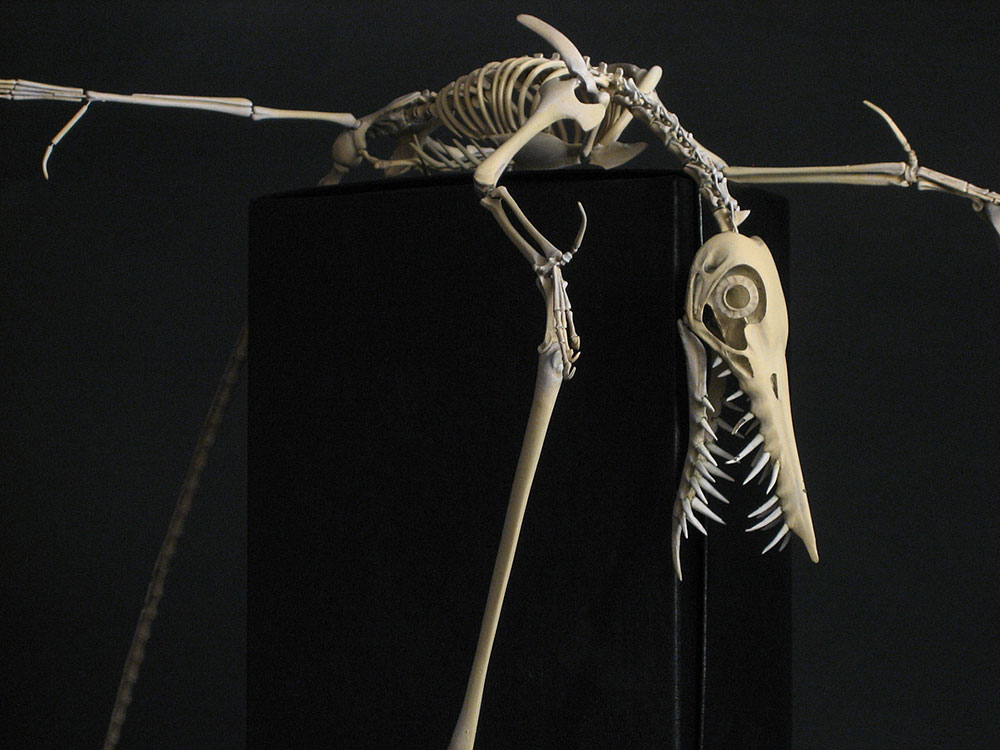
progress reports". The image at the top of the page is scanned from the photo supplied in the kit shipped to Horst Bruckmann. Each of Bill Vinikour's
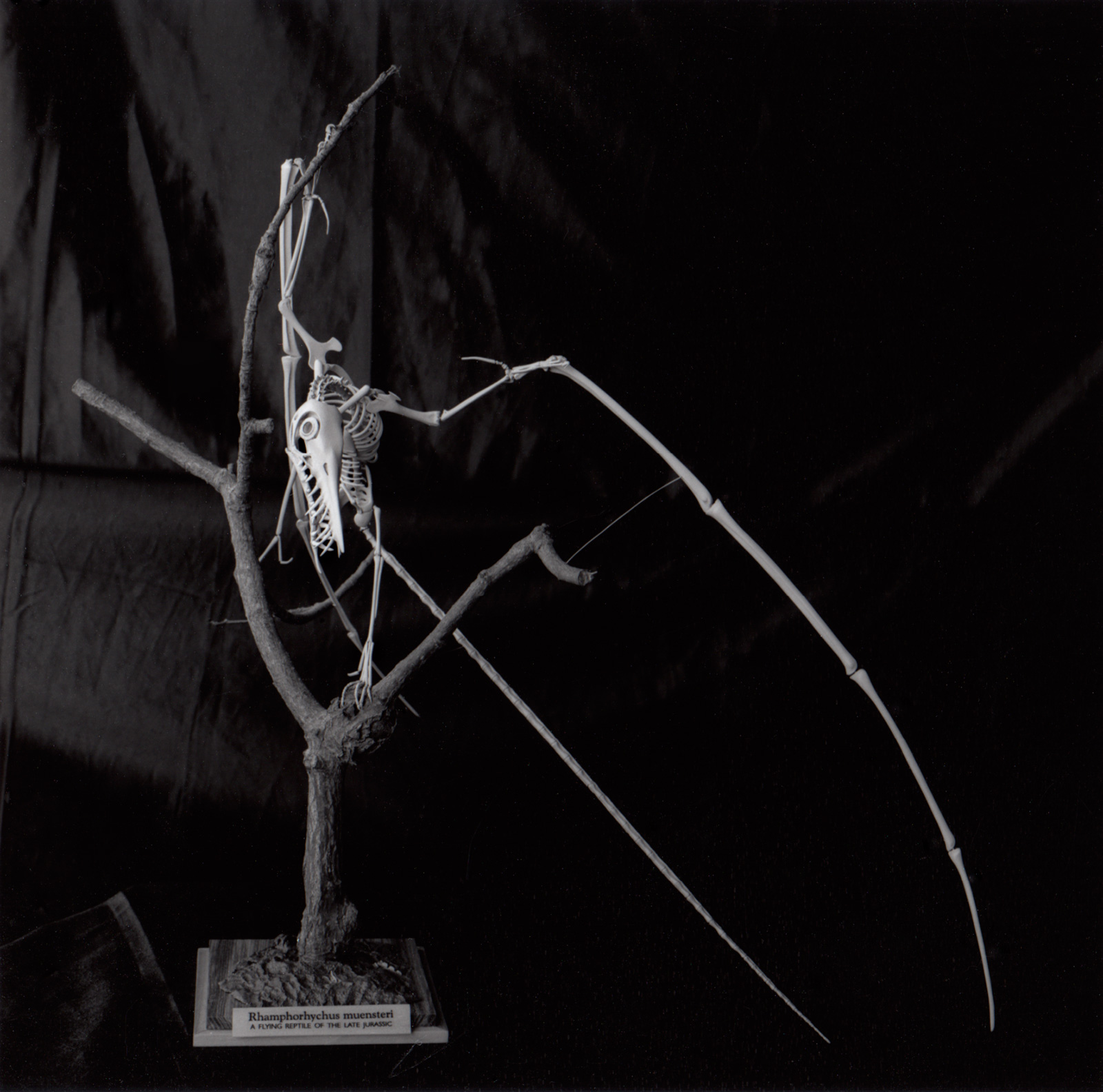
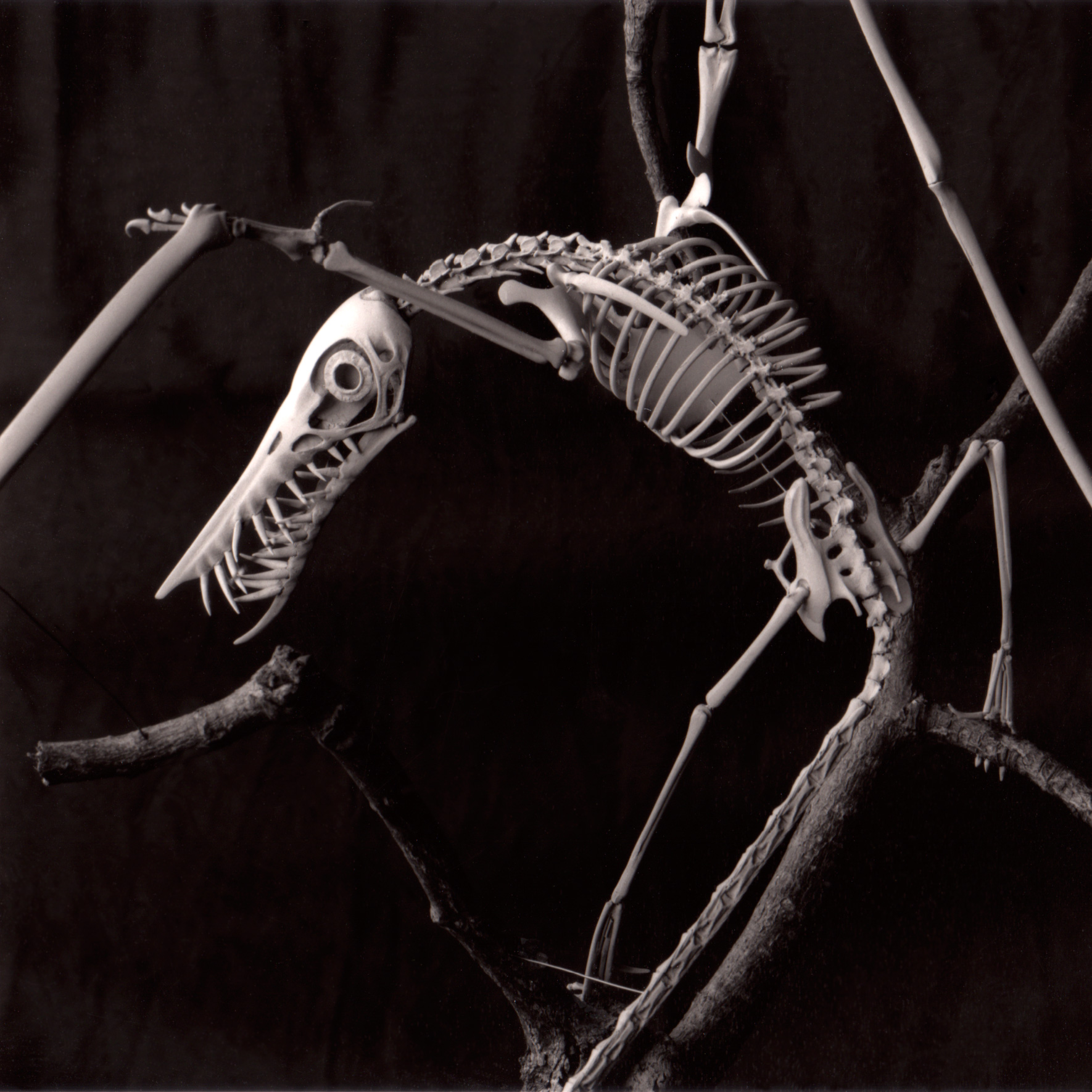
kits had different photos! So I now have three
different original prints of Steve's model. Perhaps every model came
with a different photo? If you've seen a different one I'd really
appreciate a scan.
Sightings
Horst Bruckmann’s Steve Harvey Buildup
The photo opposite was sent to me by Horst Bruckmann. It is his copy of the original Wiccart model and was fully prepared and assembled by the original sculptor Steve Harvey. Steve's models were all hand cast and typically suffered from pouring artifacts (particularly excess flash and air bubbles, see images above). With so many tiny parts it is very challenging to cast and then clean up prior to assembly.
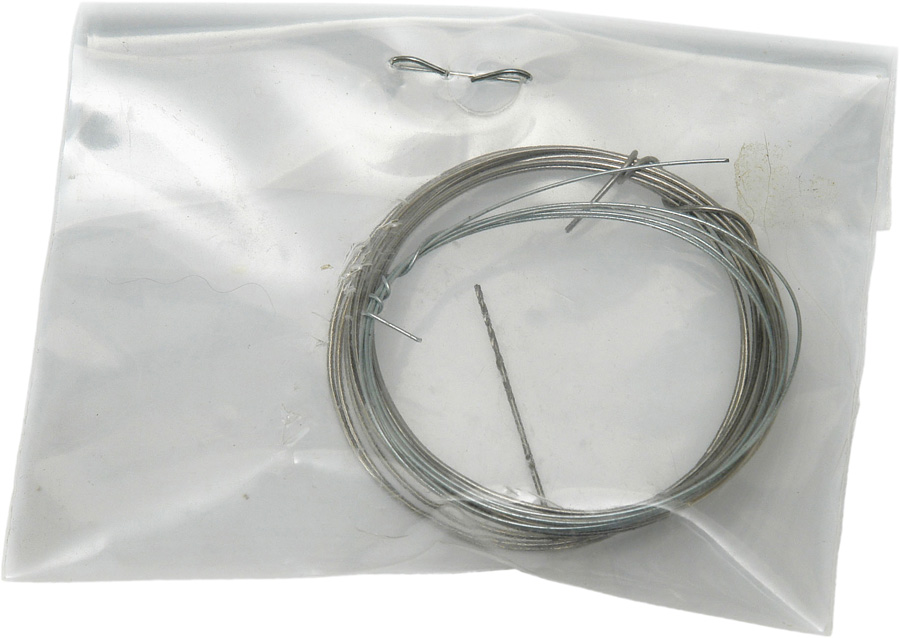
I applaud Steve's use of wire joints, but the fine wire he used (0.024 and 0.016 gauge) means the model cannot support it's own weight. This makes it difficult to display and in this photo it makes an effective interpretation of a crash landing!


Instructions
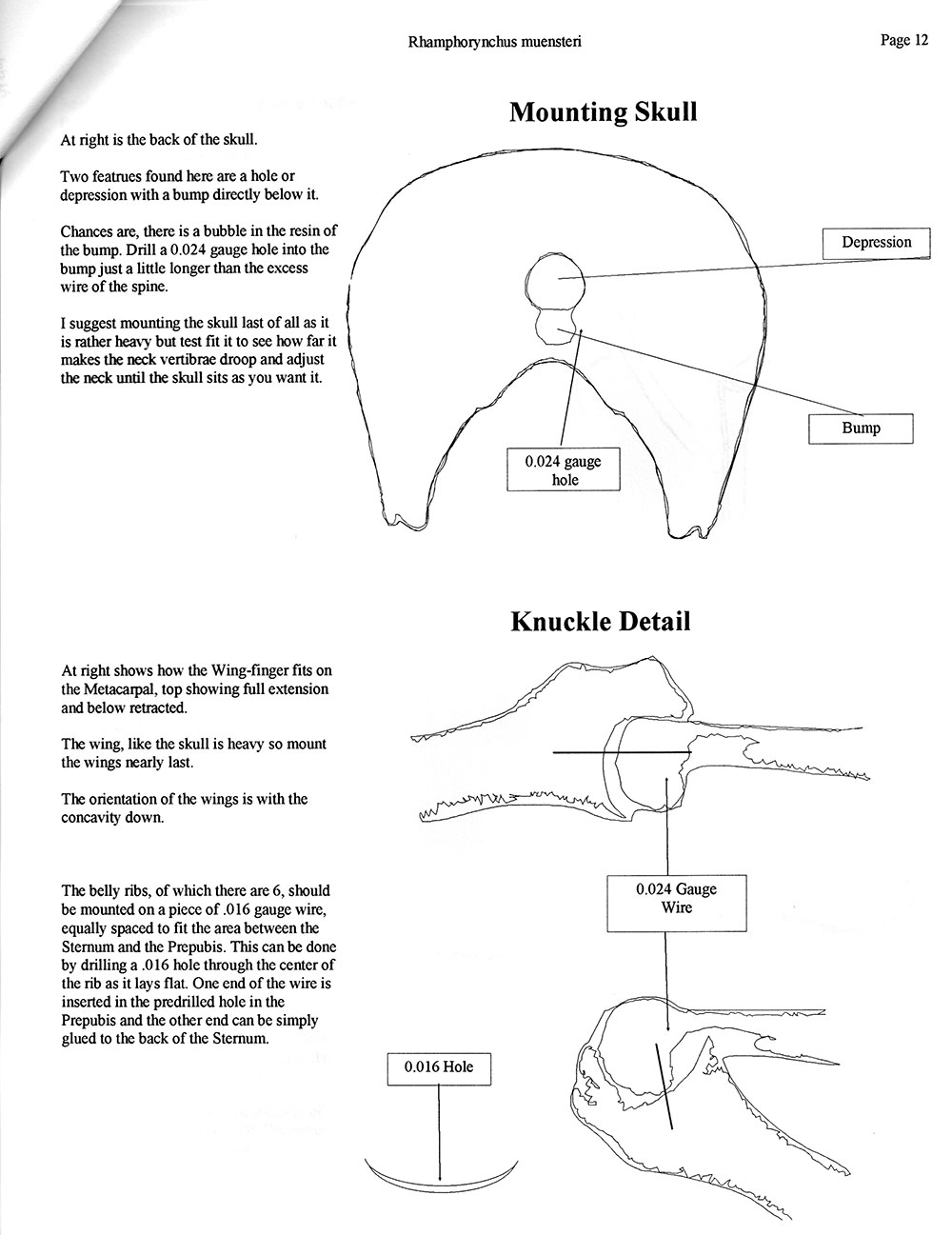
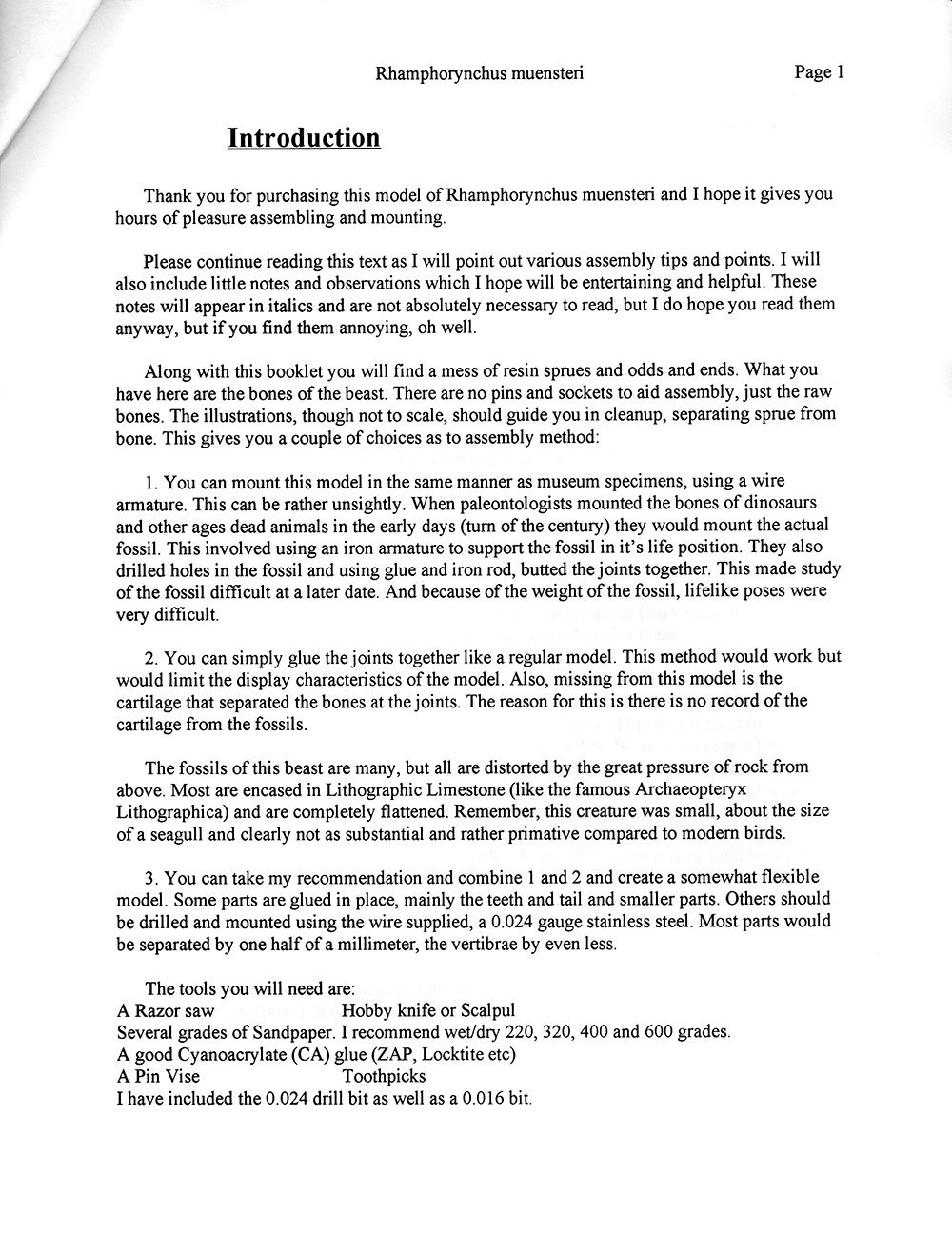
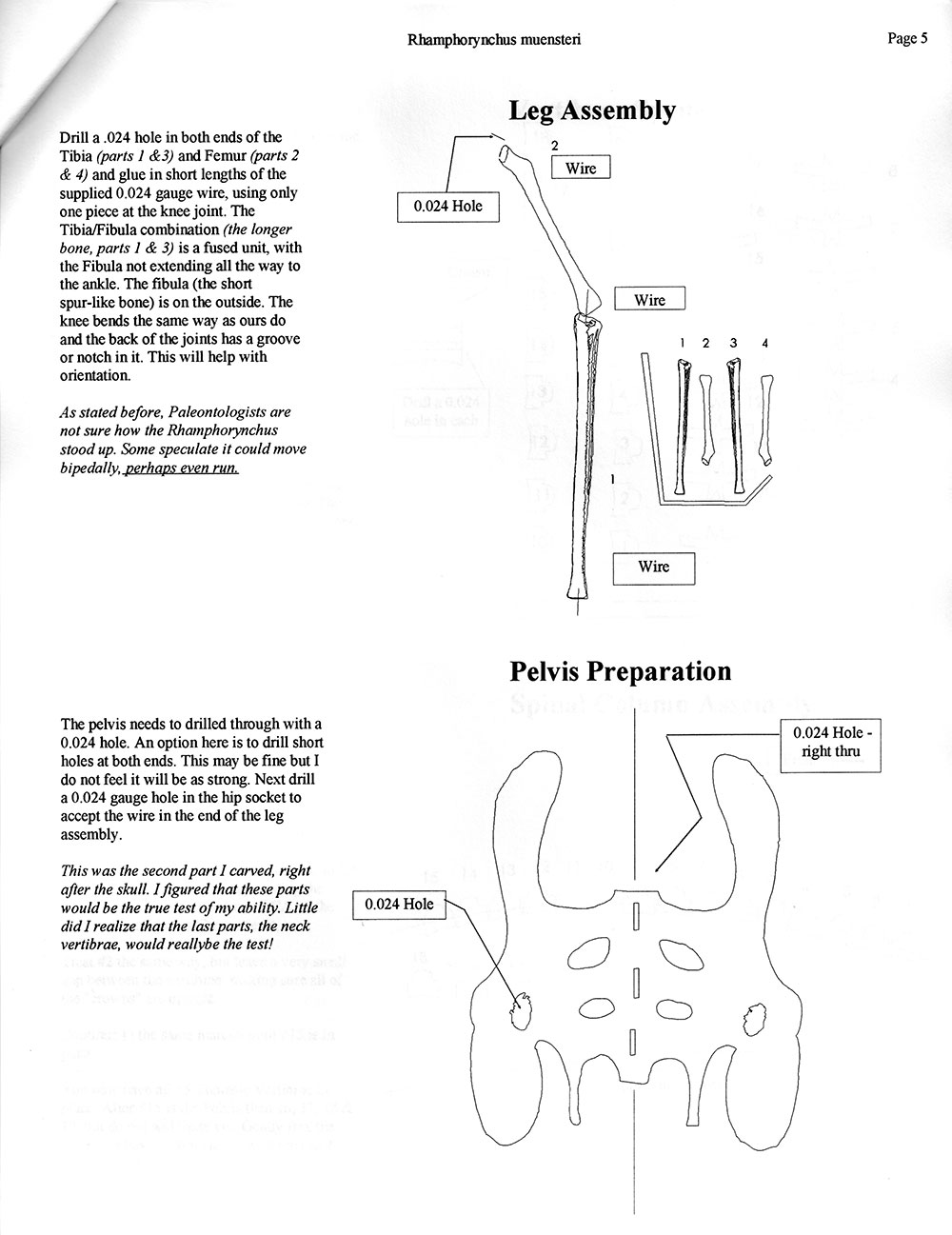
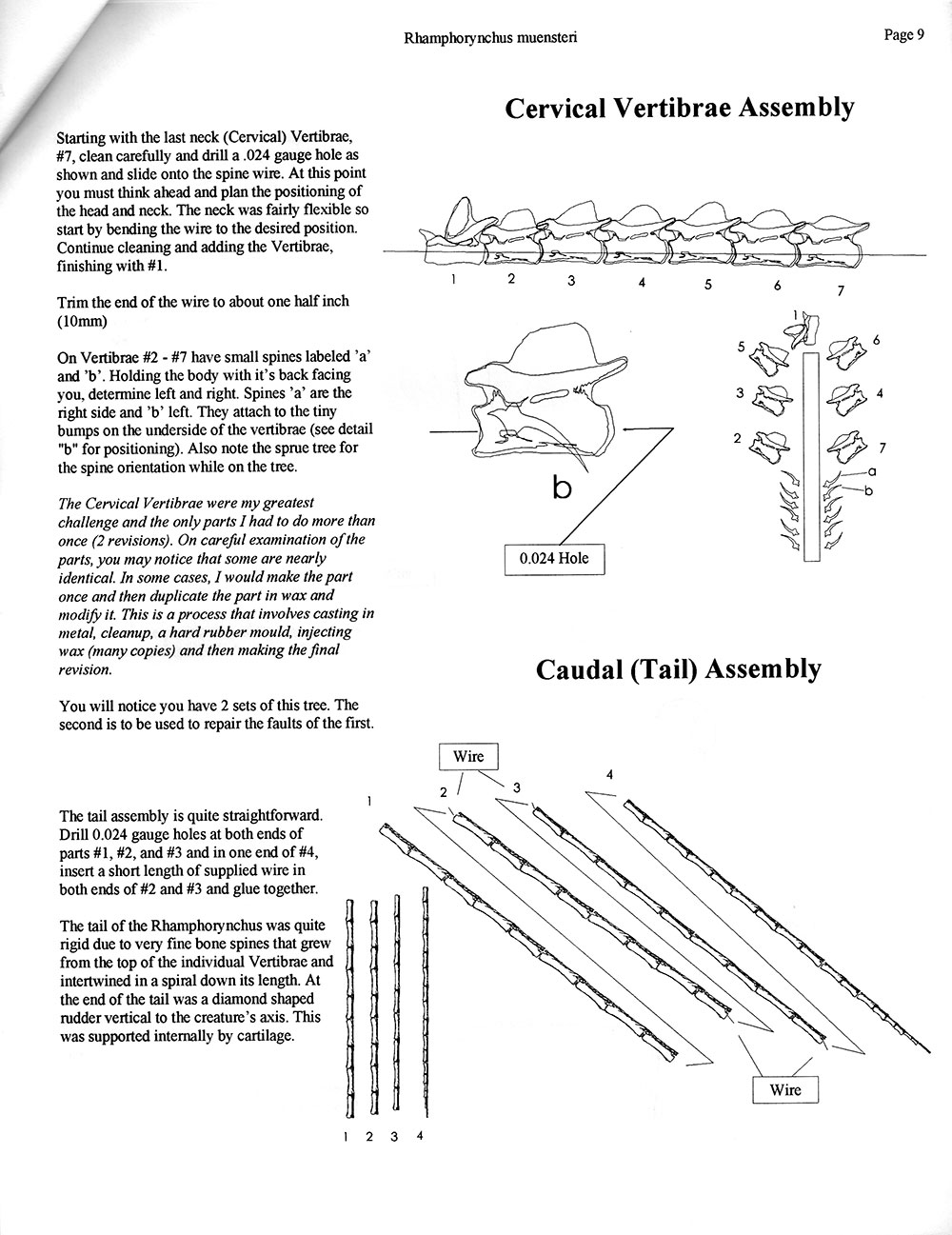
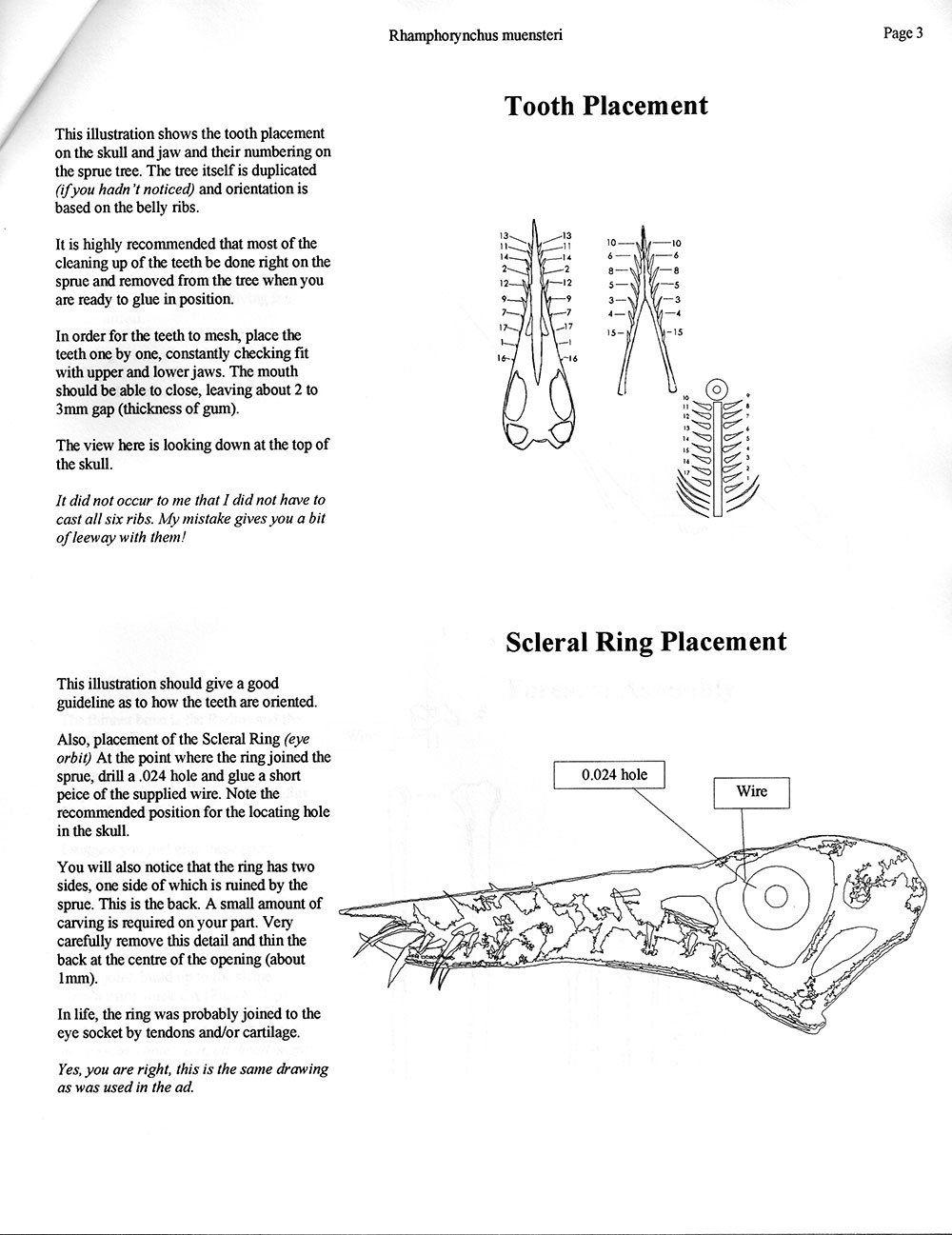
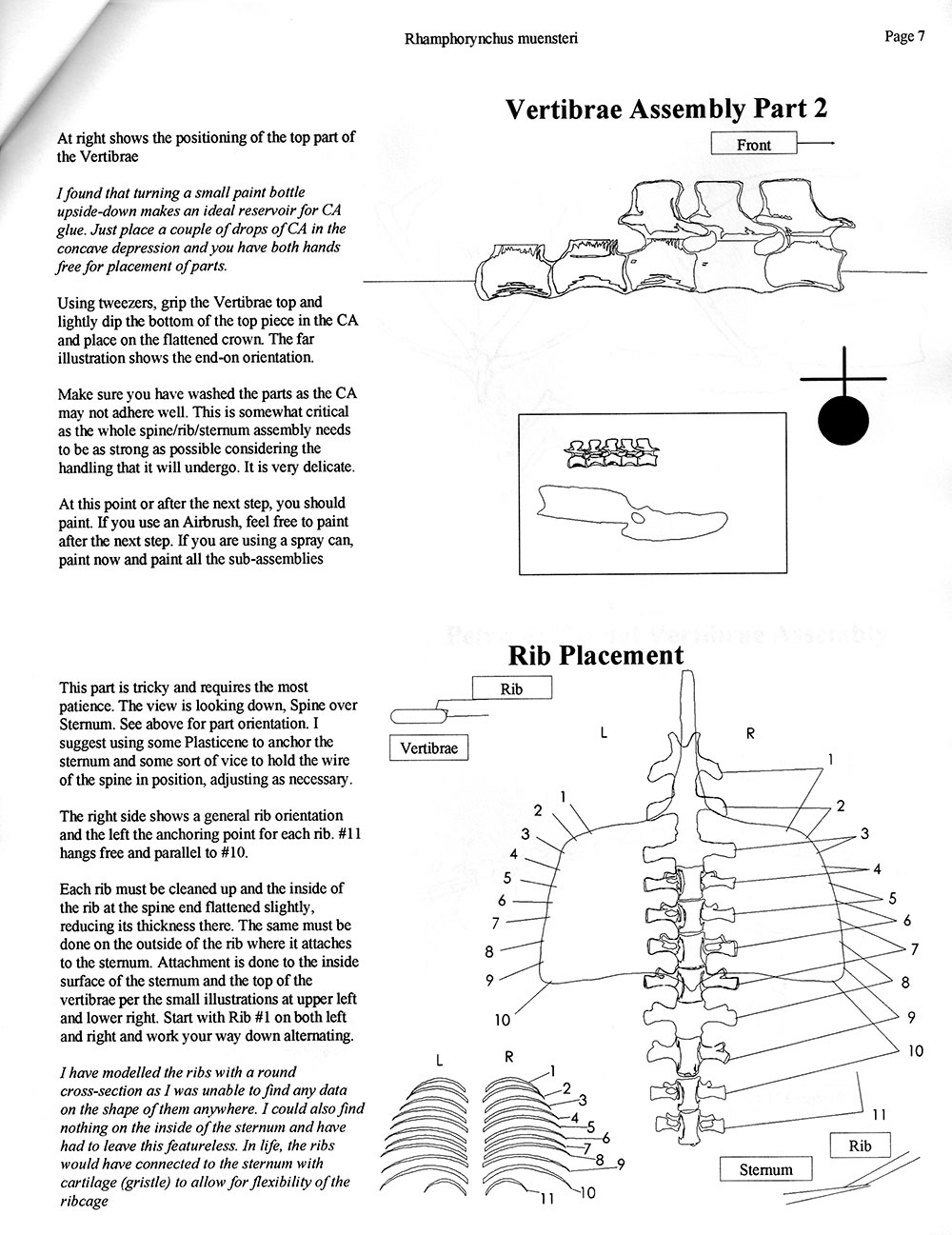
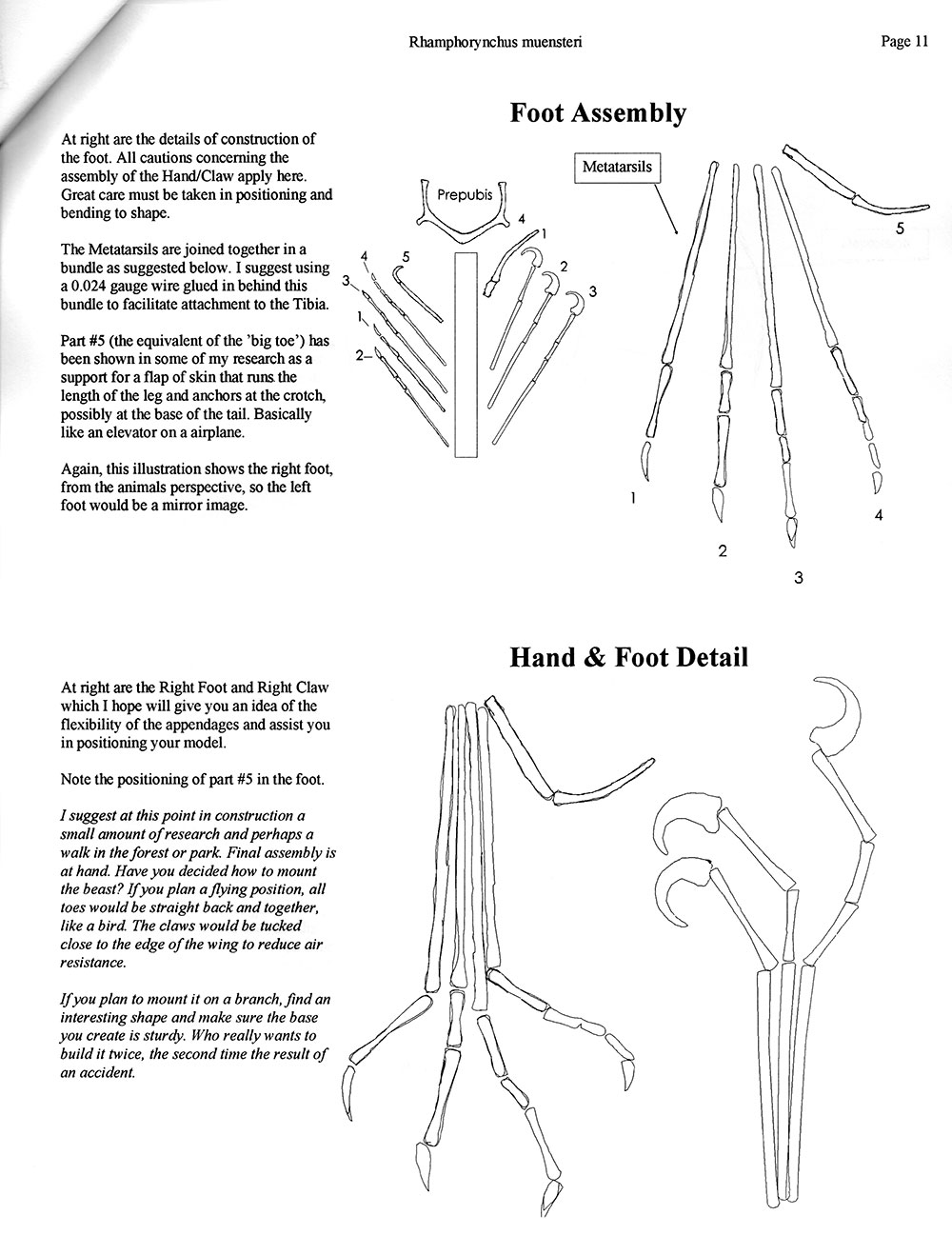
Parts
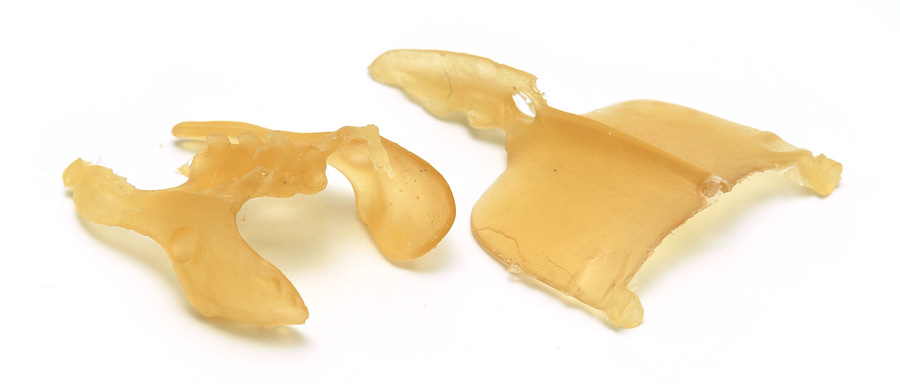
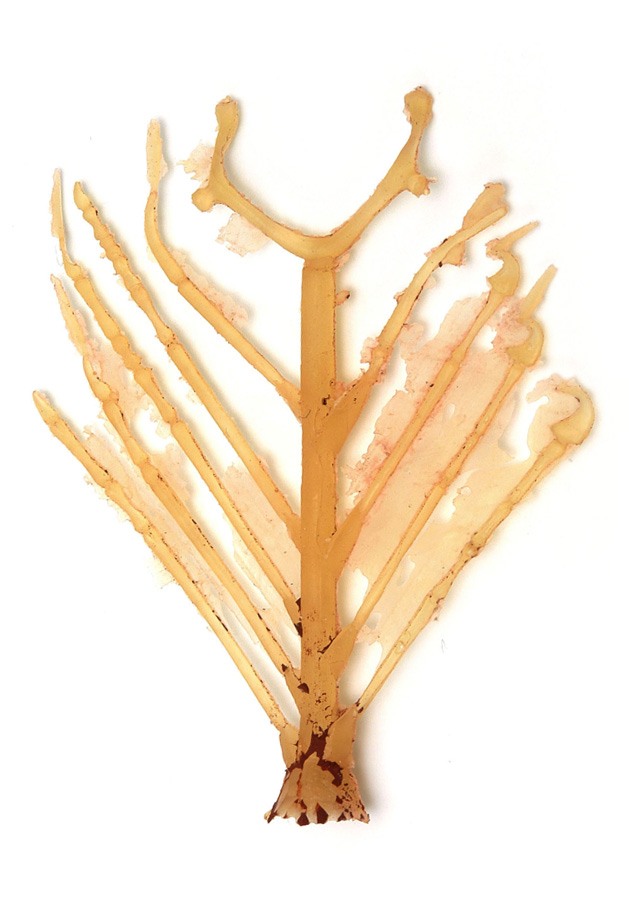
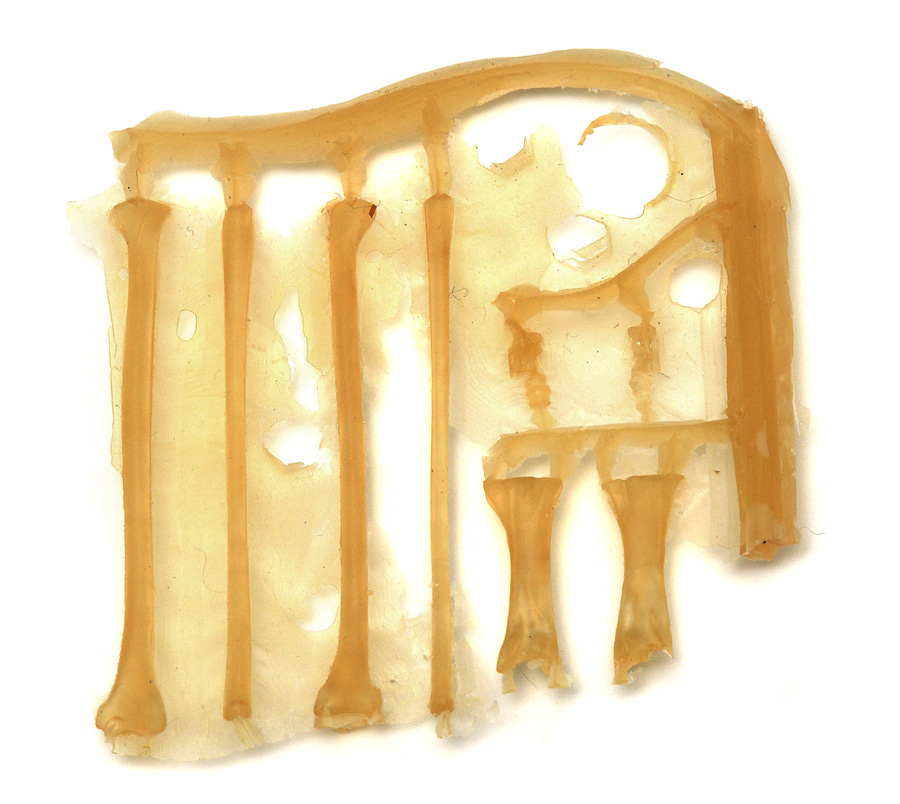
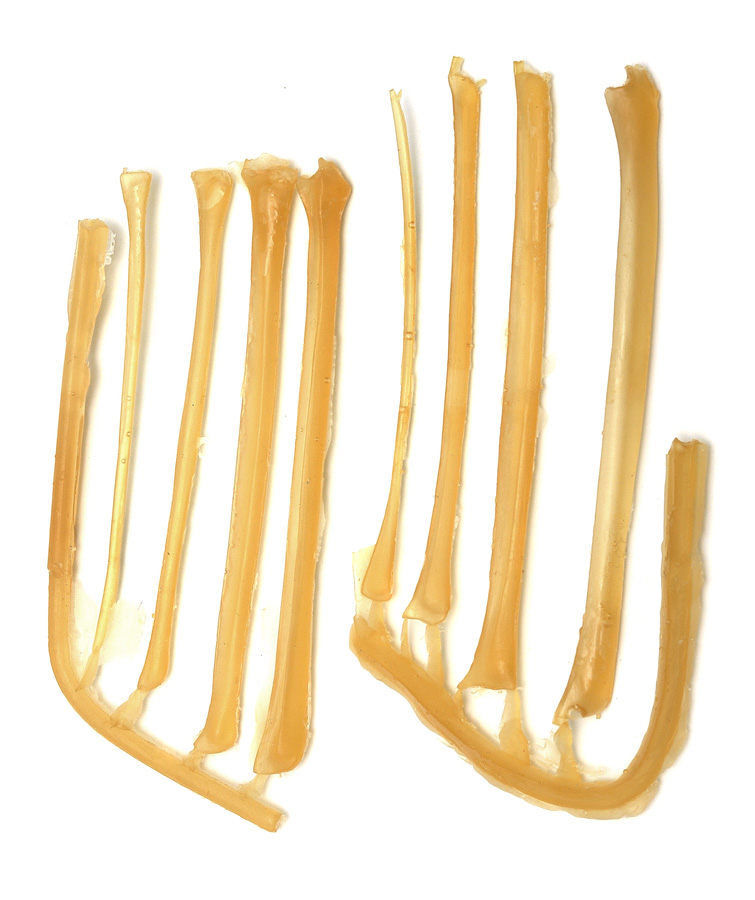
Parts are roughly cast in a translucent resin with significant flash and bubble artifacts. The translucency makes it difficult to see surface contours and embedded bubbles make some parts fragile. The extremities of many smaller parts are missing due to air bubbles in the mold. Note that parts were not photographed to scale and so are not directly comparable for size.
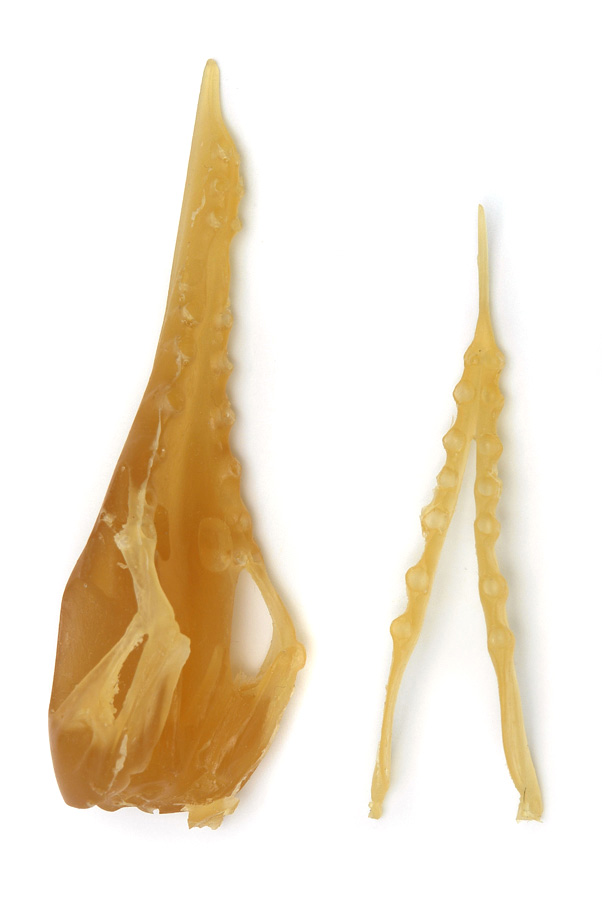
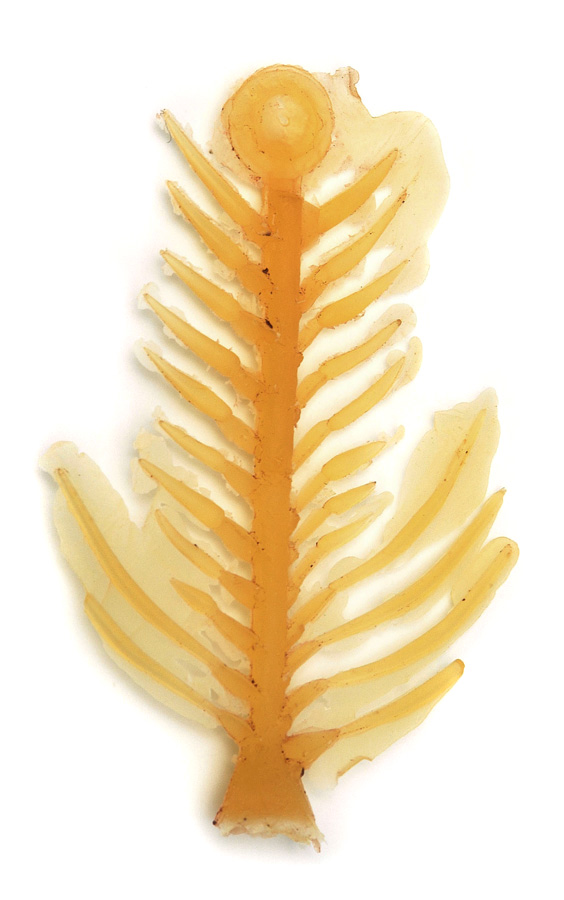
There were two copies of
this parts-tree in the kit
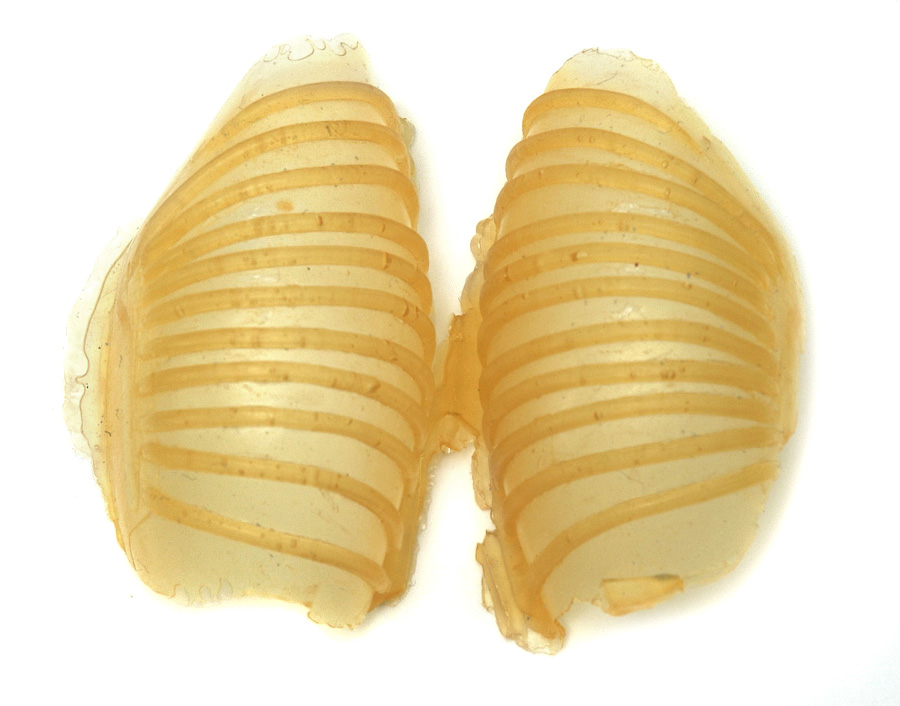
Right and left sides were gang-
molded and cast in one piece
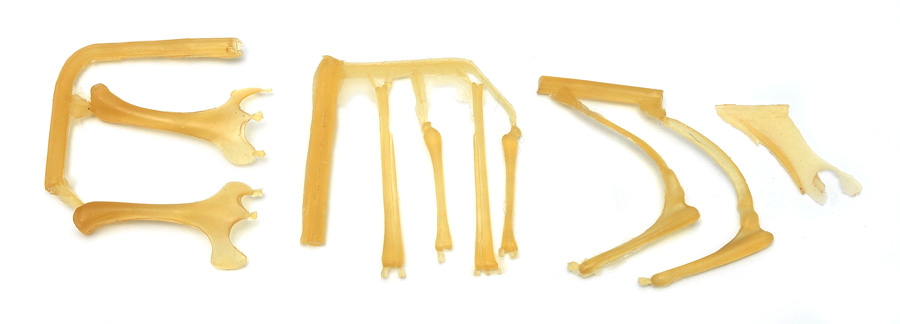
There were two copies of this parts-tree in the kit
Press
Prehistoric Times
There is a new cottage industry
dinosaur model producing company out of Canada and their first offering is
original and right on the mark. Wiccart is owned and operated by Steve Harvey
who has sent PT a copy of his first kit, Rhamphorhynchus muensteri. Wiccart's
Rhamphorhynchus muensteri (muensteri was a medium sized species of Rhamphorhynchus
and the most common type found) is a skeletal kit in 1:1 scale. That's right,
it's lifesize. Rhamphorhynchus only grew to about a yard from one wingtip to
the other. The bones are designed not as fossil but a careful representation of
how the bones would have looked from a recently dead animal. Rhamphorhynchus was
a Jurassic flying reptile (of which there are no other kits available
elsewhere). It's sharp, forward jutting teeth were designed to help it swoop
down and catch fish. Steve says that around 150 million years ago they were as
common on beaches as seagulls are today.
Wiccart's kit is beautiful
but not for beginners. An almost translucent yellow resin is used. Much of the
model must be assembled with wire. An informative 13 page assembly booklet is
included. The kit includes many small parts like individual vertebrae and
teeth. Flash is heavy and airbubbles are present, so a fair amount of
pre-assembly cleanup is required. ... A bronze version is available, pricing on
request. I think a bronze skull mounted on a wood base would be incredible!
Wiccart promises more kits soon, probably 1:1 scale skulls of Herrerasaurus or
Camarasaurus. By the way, a great reference book is The Illustrated
Encyclopaedia of Pterosaurs by Dr. Peter Wellnhofer, nicely illustrated by John
Sibbick, Cresent Books publisher.
— Issue #8, September–October 1994
Model Dinosaur
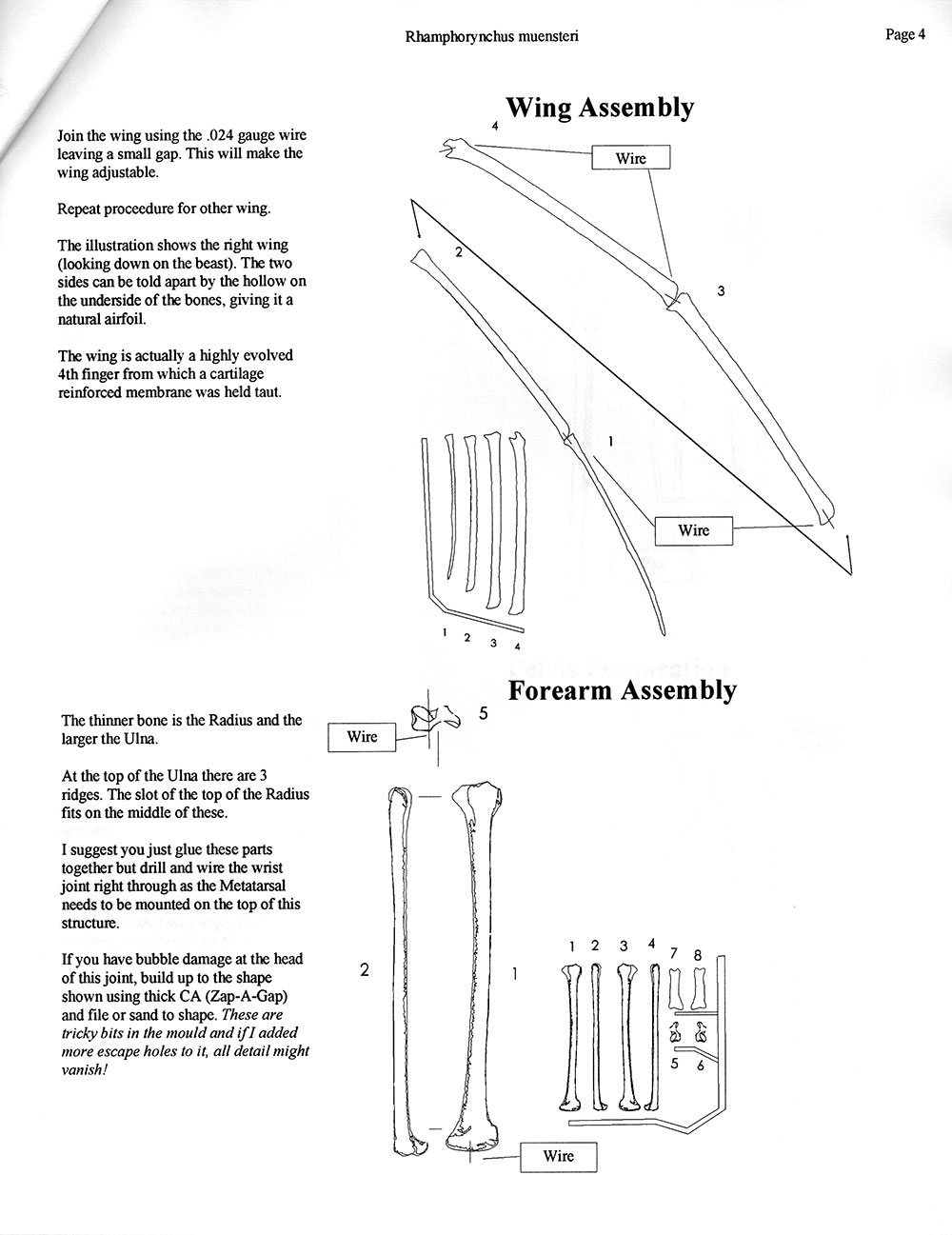
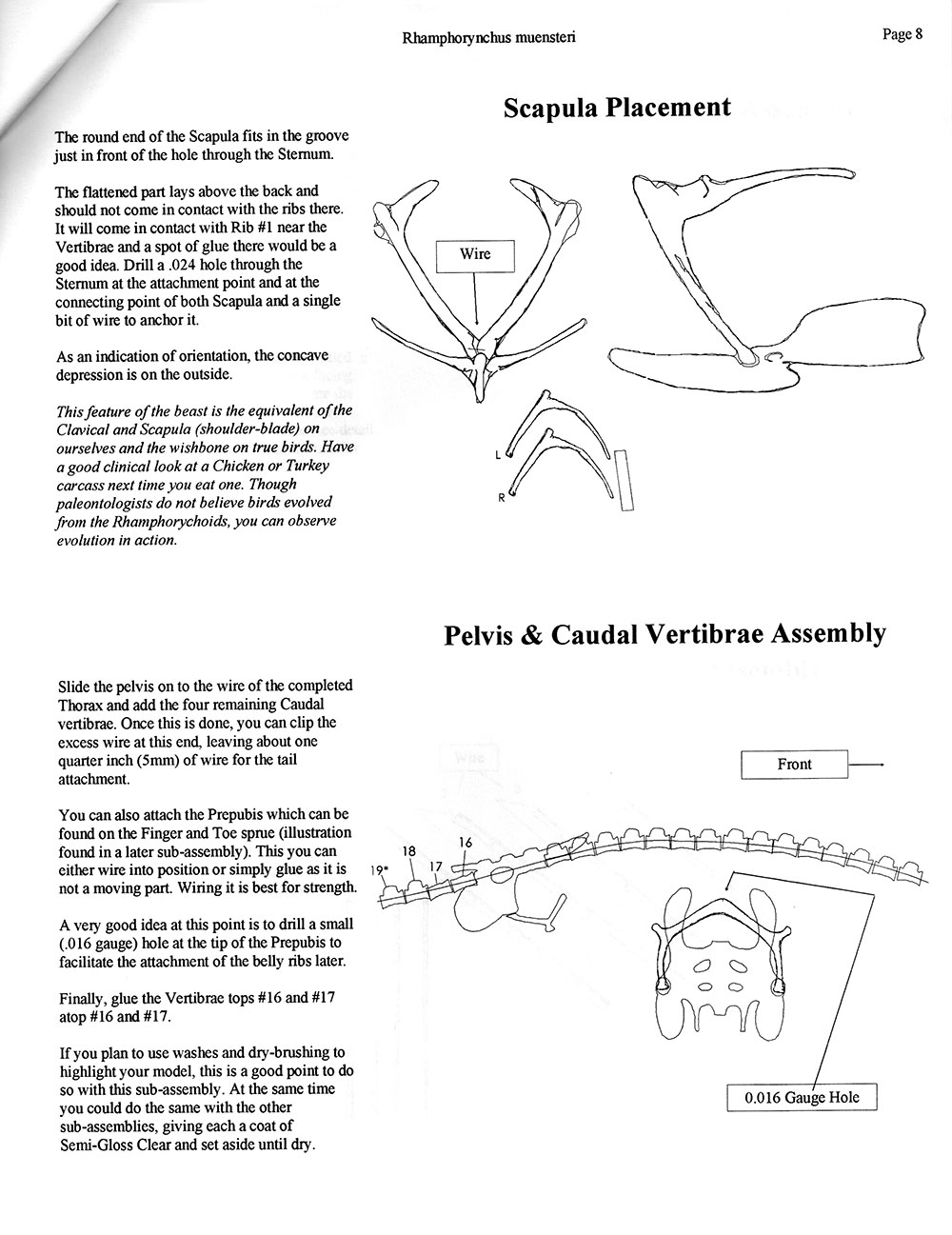
Ok, so it's not a Dinosaur but this full size resin skeletal kit of the well-known Jurassic flying reptile deserves some coverage in these pages. The parts are very delicate and are assembled using wire inserts (supplied). It is not for the novice and demands a fair degree of skill to construct. A superbly illustrated 13 page booklet provides detailed instructions and sketches to help things along and the model may be adapted during construction to adopt any pose preferred by the modeller.
— issue #4, Autumn 1994
Musings
These animals are important in the history of life on Earth as they were the first to evolve flight. For this reason they are most often mounted in a flying pose. When I do build this model I intend to mount it in a walking posture as shown opposite for a skeleton of the related Rhamphorhynchus gemmingi.
(photo source and origin of this model is unknown)